 |
|
1. Step-free entry and exterior access
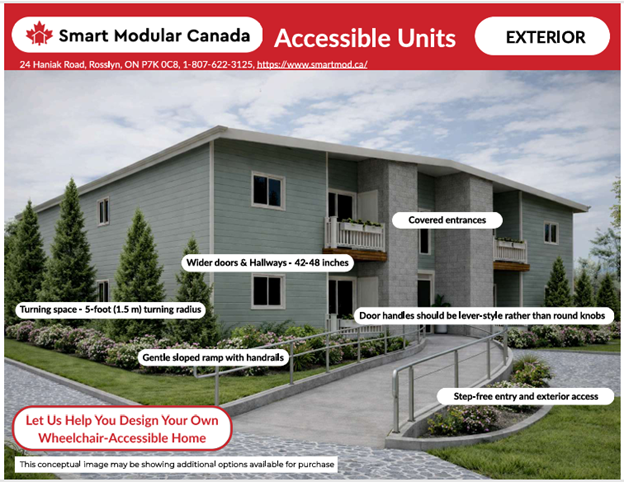
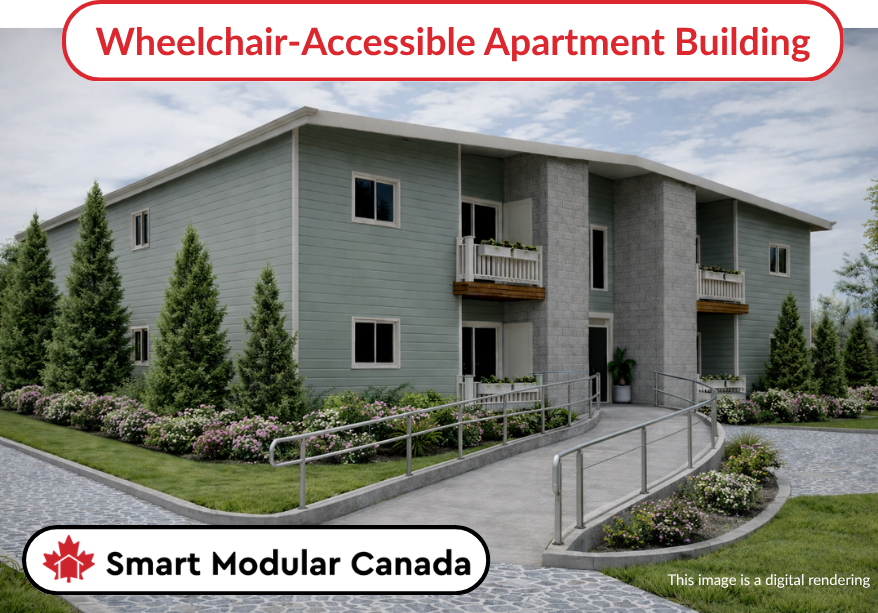
- The home should allow entry without steps.
- A level entrance or a properly designed ramp is essential. Ramps should have a gentle slope (commonly 1:12) with handrails and non-slip surfaces. Exterior pathways and driveways should be wide and smooth so a wheelchair can move easily between the house, parking area, and sidewalks.
- Covered entrances are helpful in colder climates like Northern Ontario because snow and ice can otherwise create barriers.
|
| |
|
|
 |
|
2. Wider doors and hallways
- Wheelchairs require more clearance than typical residential designs provide.
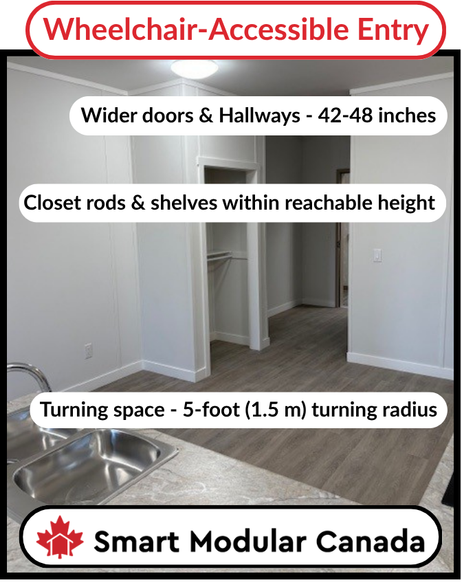
- Doorways are usually at least 32–36 inches (81–91 cm) wide. Hallways should ideally be 42–48 inches wide so a wheelchair can pass through comfortably. Pocket doors or sliding doors can be useful because they eliminate the space needed for door swings.
- Door handles should be lever-style rather than round knobs, which are easier to operate.
|
| |
|
|
 |
|
3. Turning space
- Inside rooms need sufficient open space for turning.
- Wheelchairs generally require a 5-foot (1.5 m) turning radius. Designers try to include these turning circles in key areas such as:
- kitchens
- bathrooms
- bedrooms
- entryways
- Furniture placement should also allow clear circulation paths.
|
| |
|
|
 |
|
4. Accessible kitchen design
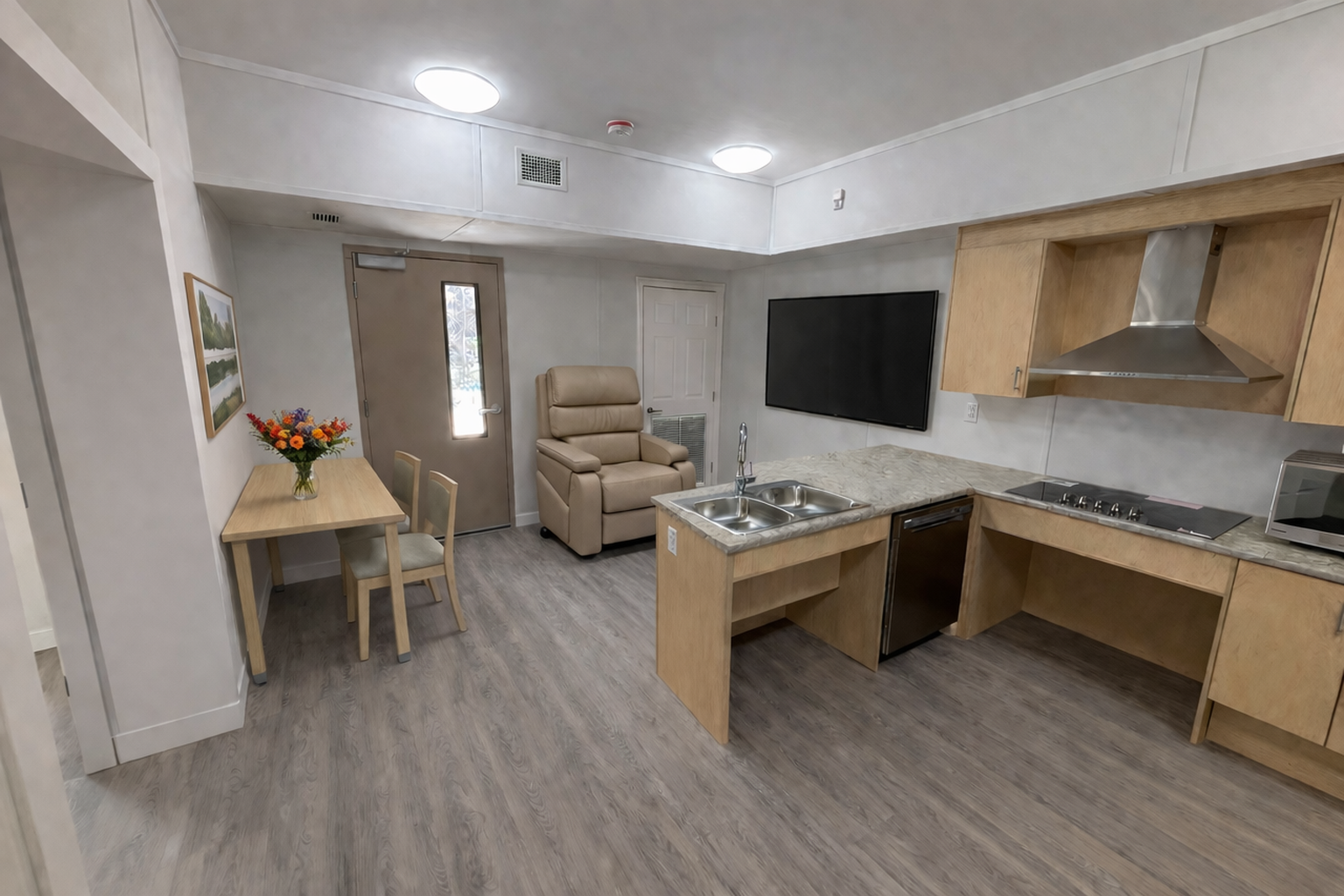
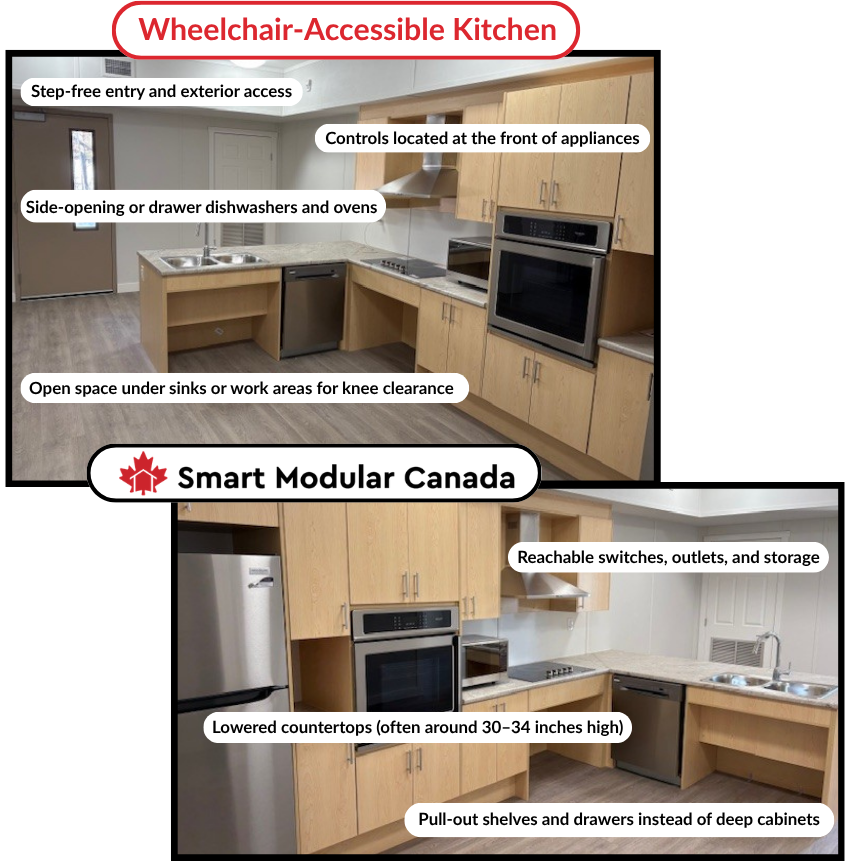
- Kitchens often require the most thoughtful adaptation.Important elements include: Lowered countertops (often around 30–34 inches high)
- Open space under sinks or work areas for knee clearance
- Pull-out shelves and drawers instead of deep cabinets
- Side-opening or drawer dishwashers and ovens
- Controls located at the front of appliances
- Cooktops with front controls reduce the need to reach over hot surfaces.
|
| |
|
|
 |
|
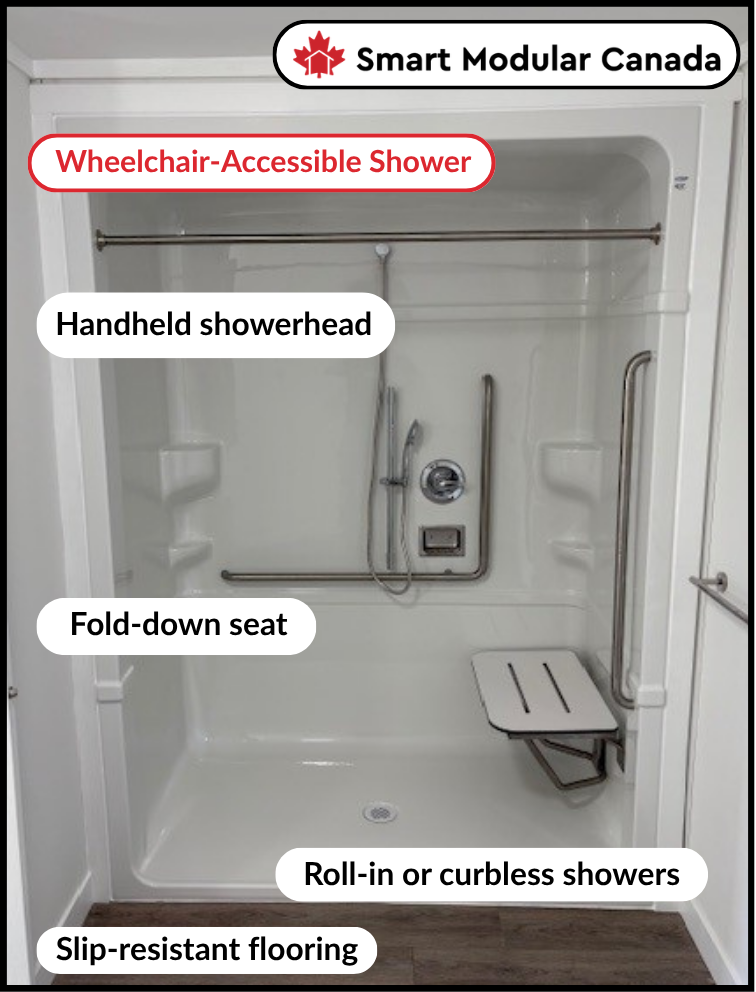
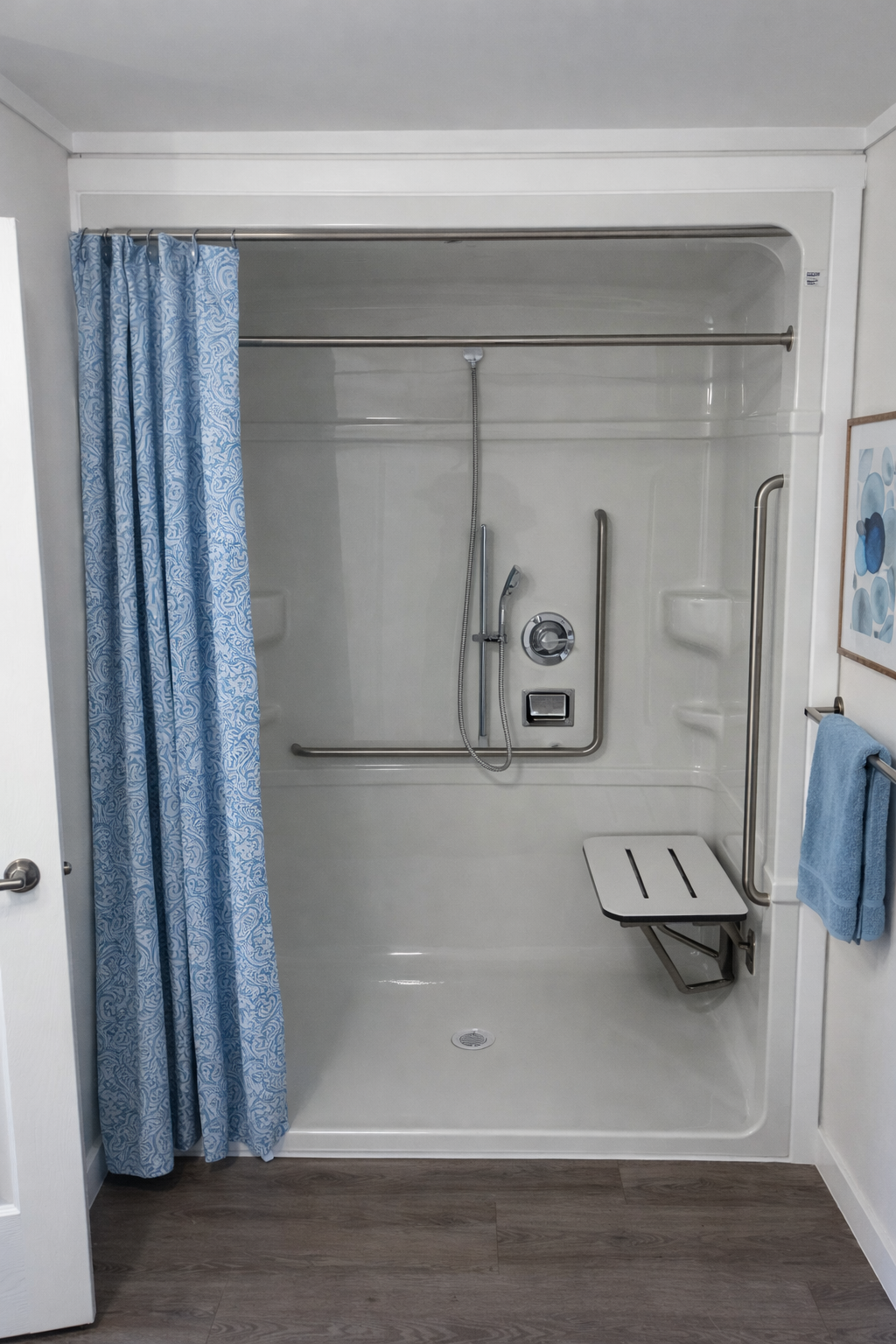
5. Wheelchair-friendly bathrooms
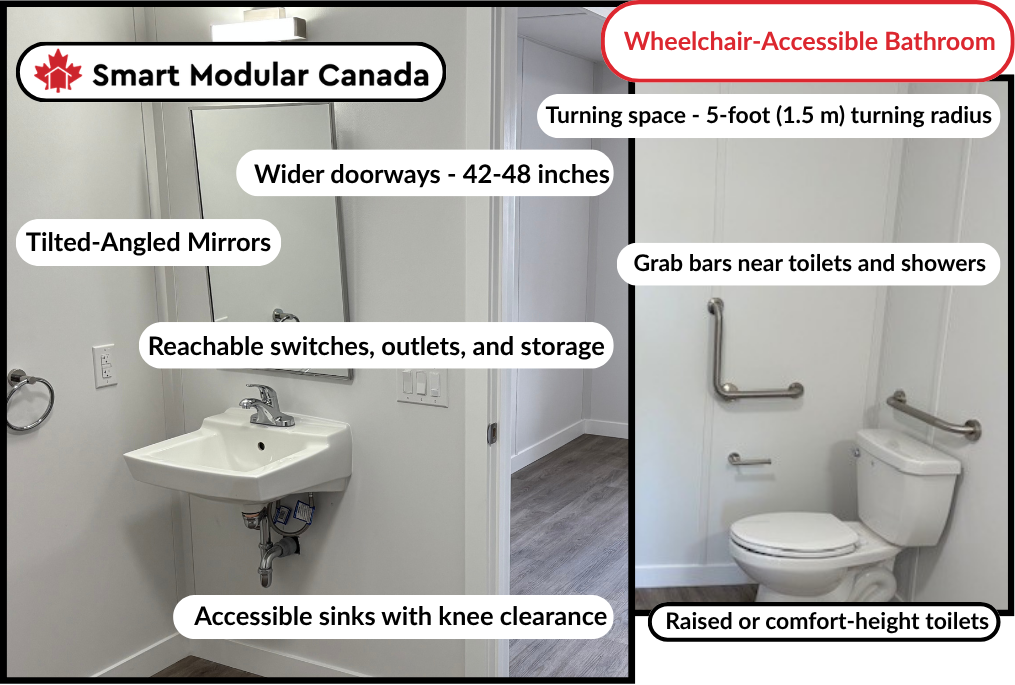
- Bathrooms are critical for independence and safety.
Key features include:
- Roll-in or curbless showers
- Grab bars near toilets and showers
- Raised or comfort-height toilets
- Accessible sinks with knee clearance
- Slip-resistant flooring
- Showers often include a fold-down seat and a handheld showerhead.
|
| |
|
|
 |
|
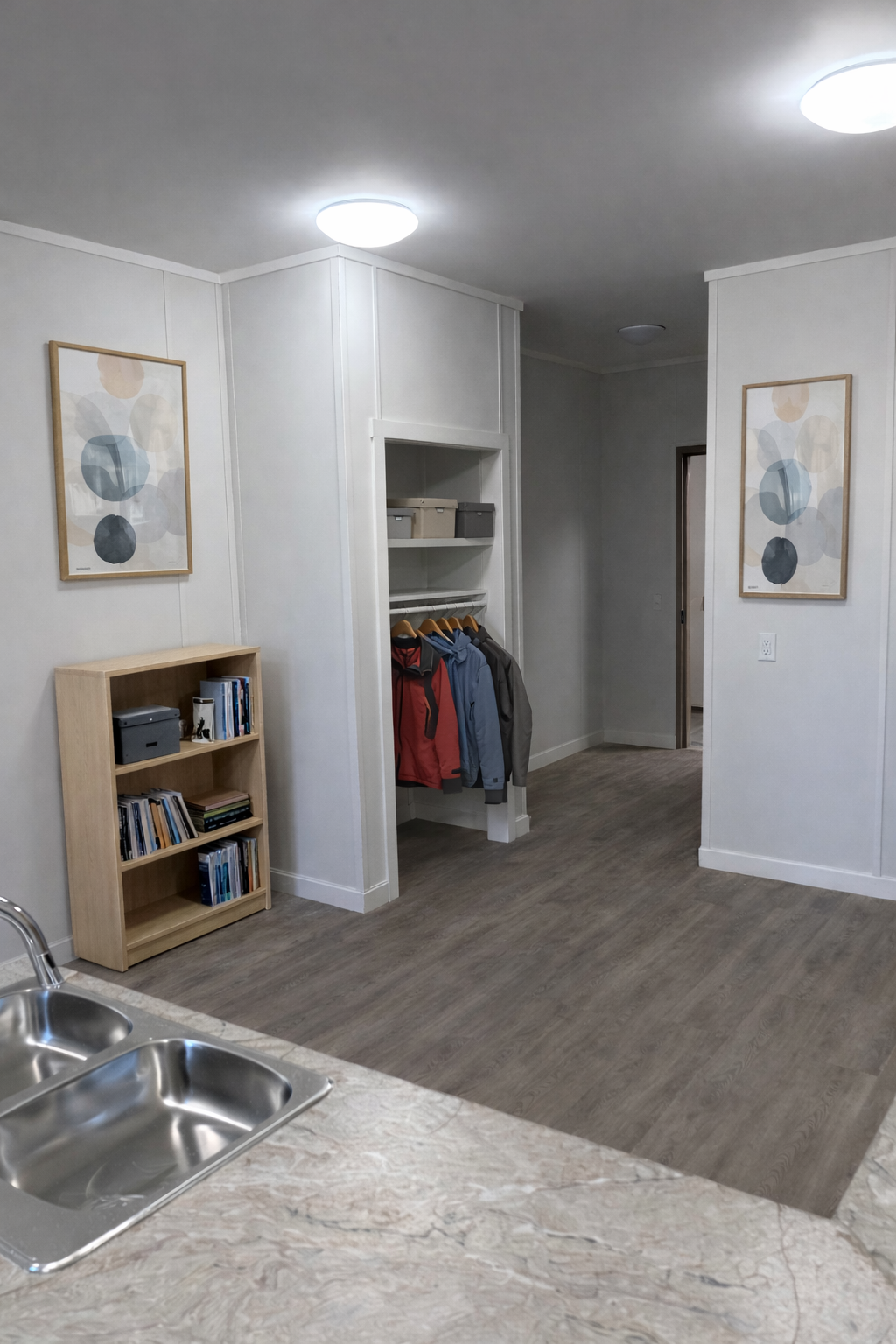
6. Reachable switches, outlets, and storage. Controls should be placed within comfortable reach.
Common guidelines:
- light switches about 36–44 inches from the floor
- outlets about 18 inches from the floor
- closet rods and shelves within reachable height
- Smart home controls or voice assistants can also help reduce the need to physically reach switches.
|
| |
|
|
|
|
7. Flooring and thresholds
- Flooring should allow smooth rolling.
Good choices include:
- hardwood
- vinyl plank
- laminate
- low-pile carpet
- Avoid thick carpet or uneven surfaces.
- Door thresholds should be flush or very low to prevent wheels from catching.
|
| |
|
|
|
|
|
 |
|
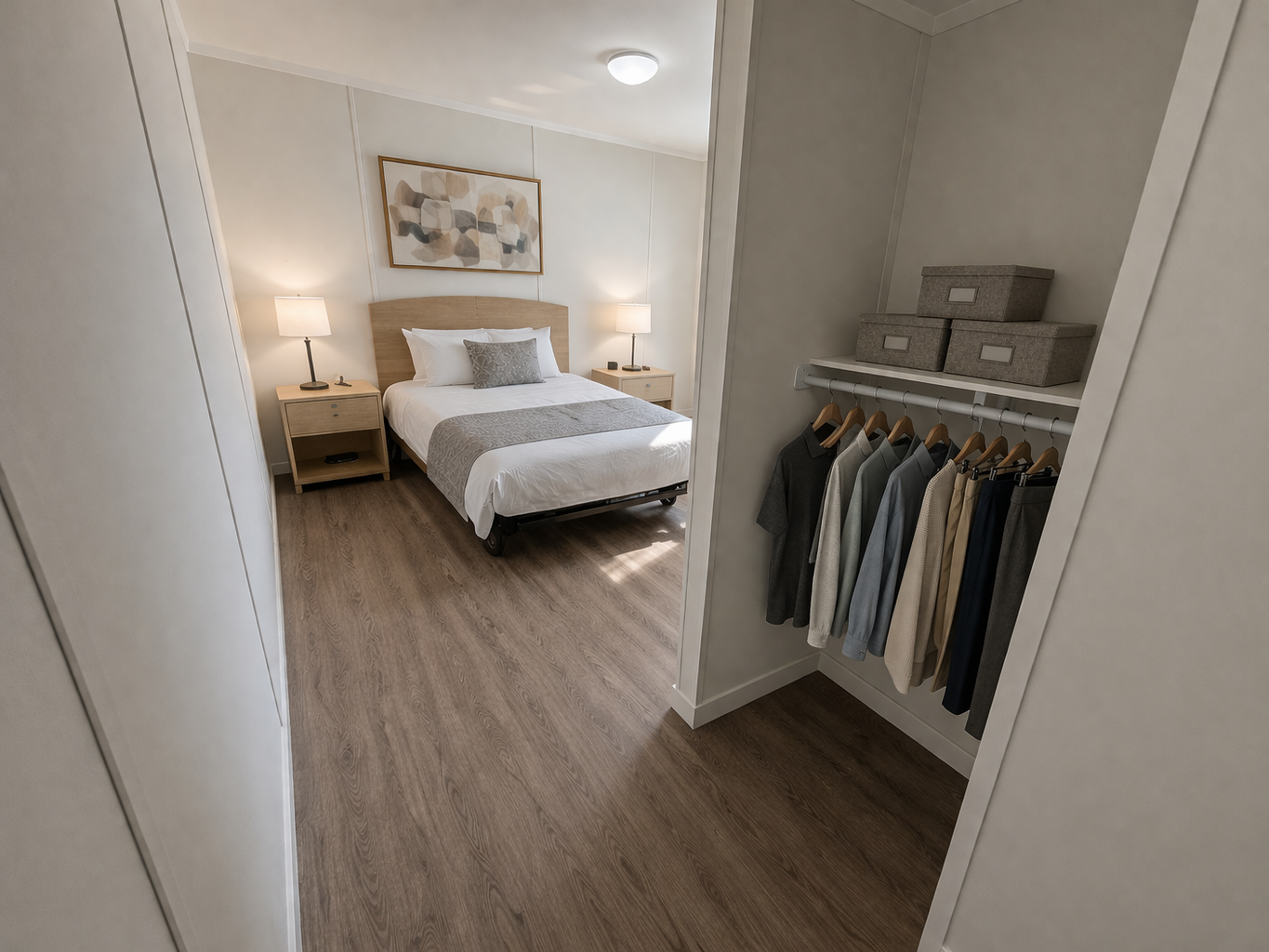
8. Bedroom accessibility
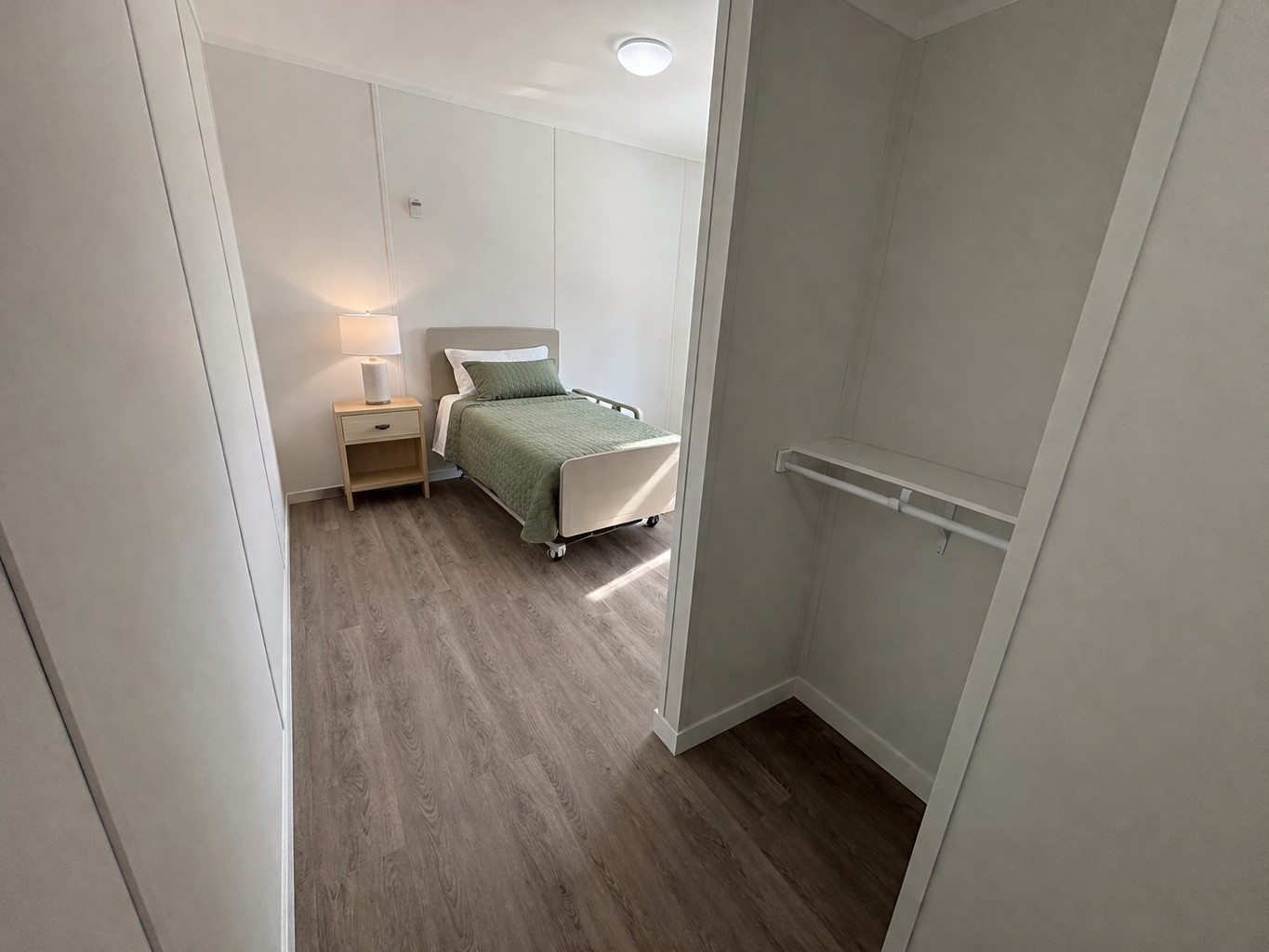
- Bedrooms need enough space to maneuver around the bed.
- A typical design leaves at least 36 inches of clearance on both sides of the bed so a wheelchair can approach from multiple directions.
- Closets with sliding doors and adjustable rods work well.
|
|
|
|
|
|
|
 |
|
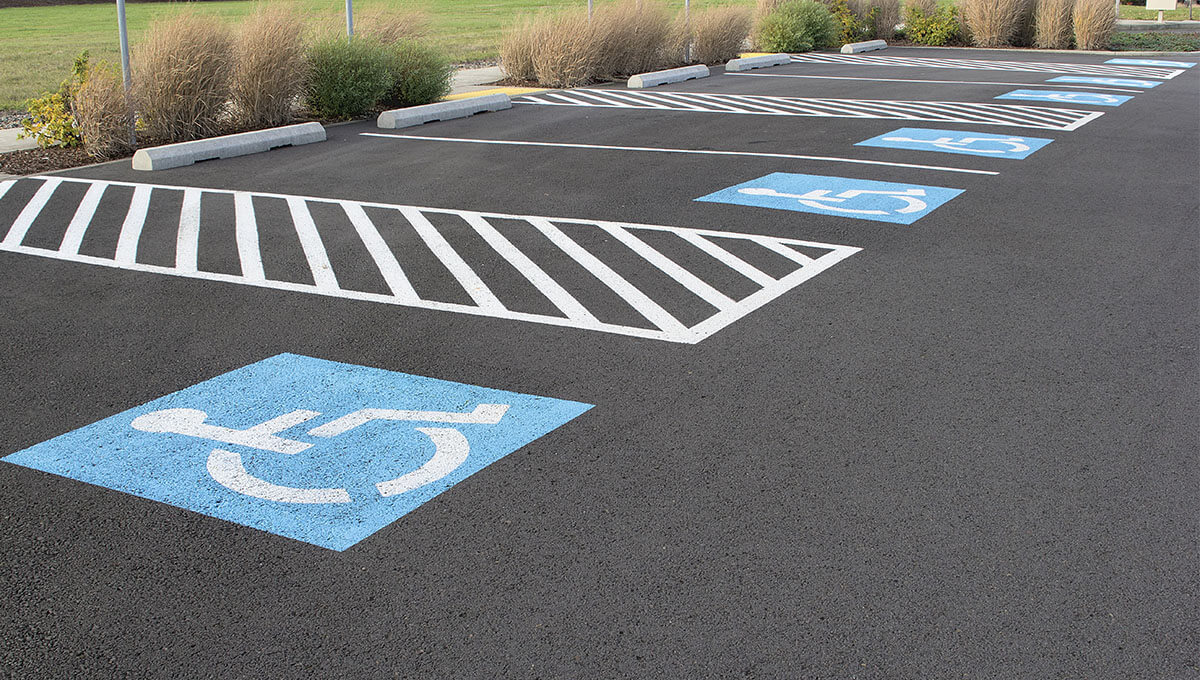
9. Accessible parking and garage
- If the home includes a garage or driveway, it should allow wheelchair transfer from a vehicle.
Designers often include:
- extra-wide parking space
- level path to the entrance
- automatic garage door openers
|
|
|
|
|
|
|
 |
|
10. Safety and future adaptability
- Good accessible design also anticipates future needs.
Examples include:
- reinforced bathroom walls so grab bars can be added later
- stacked closets that allow future elevator installation
- wider structural spacing to allow lift systems
|